
Ruoca Audio
What makes a Cordless Lapel Mic the best choice in 2026? Not a crowded feature list. It is the mic that captures clear speech, stays connected, and fits the way you actually record. A creator filming a windy street interview needs different strengths from a teacher recording lessons in a quiet room. Small details matter: how securely the clip grips a shirt collar, whether a phone needs an adapter, and how quickly the transmitter pairs before a take. Sometimes setup is the real test.
This guide looks at sound quality, wireless stability, battery life, comfort, compatibility, and practical value. It also considers the receiver and charging case, because a strong microphone is less useful when its connections do not match your camera or phone. Specifications can help, but they do not tell the whole story. Clothing rustle, room echo, and a brief signal drop may matter more than a headline range figure. For outdoor clips, wind protection and placement can shape results more than a polished product page suggests. For longer sessions, compare runtime claims with your recording habits, not just the number printed on the box. A backup recording feature may preserve usable audio if a connection falters, though not every workflow needs it. We will compare options by common recording needs rather than assume one model suits everyone. No mic is perfect. Even careful testing has limits: voices, rooms, and devices vary, and one short recording cannot represent every situation. Use these comparisons as a practical starting point, then check current compatibility and product details before buying. The best choice should make recording feel simpler, not give you another problem to manage.
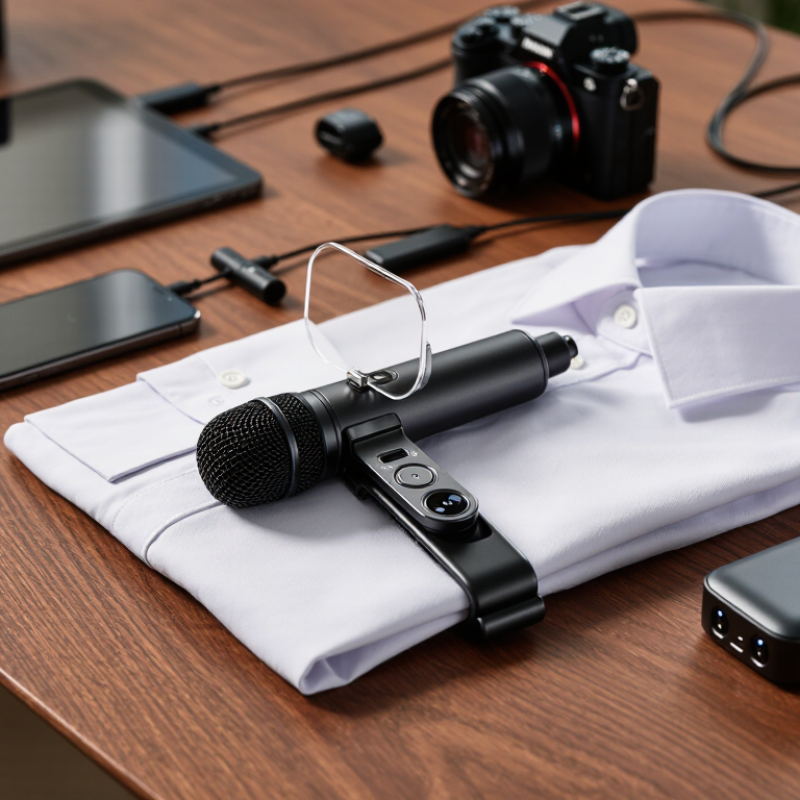
A cordless lapel microphone is a small clip-on mic that sends speech to a separate receiver without a cable running between them. The mic usually sits near the speaker’s collar, where it can pick up a voice more clearly than a camera or phone microphone several feet away. Inside the system, a microphone capsule turns sound into an electrical signal. A compact transmitter then sends that signal wirelessly to a receiver connected to a camera, phone, or recording device.
That is the basic chain. The receiver converts the incoming signal into audio the recording device can capture. Some systems use one transmitter; others support two speakers. Before recording, check that the receiver connector matches your device, and make a short test recording. Wireless does not mean effortless. A transmitter still needs power, and walls or nearby wireless devices can sometimes disrupt the signal.
Placement matters. Clip the mic securely, but keep it from rubbing against a jacket or scarf. Even a tiny fabric scrape can become distracting in a quiet interview. I have found that checking the audio with headphones catches problems a screen meter may miss. It is a simple habit, though easy to skip when everyone is waiting.
A cordless setup gives the speaker room to move, but clear sound still depends on mic position, surroundings, and a careful test.
What Is the Best Cordless Lapel Mic in 2026?
Key Features That Affect Audio Quality and Reliability
A strong cordless lapel mic should capture clear speech before adding clever processing. Check its signal-to-noise ratio, capsule quality, and ability to handle loud syllables without clipping. In a quiet room, listen for hiss during pauses; outdoors, test wind protection beside a moving jacket. ITU-T Recommendation P.800 uses a five-point Mean Opinion Score scale, from poor to excellent, for assessing perceived speech quality. It is a useful reminder: specifications matter, but recorded voice should be judged by listening, too.
Wireless stability depends on more than advertised range. Congested radio environments, walls, and a transmitter hidden beneath clothing can cause dropouts. Look for clear frequency-scan controls, reliable receiver placement, and realistic battery-life claims. A backup recording can save an interview if the signal falters. Small details count. One caveat: a higher sample rate alone will not fix a weak capsule or poor mic placement.
Tips: Clip the mic near the upper chest, keep fabric from brushing its grille, and record a 20-second test in the actual setting. Listen back on headphones for rustle, room echo, and sudden level changes. A quick test can expose problems you might miss on a tiny camera screen.
These values illustrate the signal-to-noise ratio (SNR) when the signal level stays constant and noise amplitude changes. SNR is calculated as 20 × log10(signal amplitude ÷ noise amplitude). A higher SNR means less noise relative to the signal; actual microphone measurements depend on the device and test conditions. For a cordless lapel mic, also consider wireless stability, battery life, and microphone placement.
What Is the Best Cordless Lapel Mic in 2026?
Cordless lapel microphones come in a few practical designs, and the right choice depends on how you record. A compact clip-on transmitter has a built-in microphone, making it useful for quick interviews, classroom talks, and short videos. Clip it near the collar, not beneath a thick jacket. Fabric can rub against the capsule and create distracting noise. Small and simple.
A separate bodypack transmitter uses a wired lavalier capsule. This setup can look discreet on camera while allowing precise microphone placement. It suits presentations, interviews, or scenes where the transmitter can sit in a pocket or waistband. Dual-channel systems can record two speakers at once. Still, people moving in different directions may produce uneven levels. That takes practice.
Tips: Check that the receiver matches your phone or camera input before filming. Test speech while standing, turning, and walking; a quiet-room test may miss clothing noise. Listen back with headphones. A tiny clip-on is convenient, but it may look awkward on a thin shirt. Placement still takes trial and error.
What Is the Best Cordless Lapel Mic in 2026?
Comparing cordless lapel microphones in 2026 requires more than checking battery claims. The receiver, transmission method, and voice clarity matter equally. Bluetooth SIG’s 2024 Market Update recorded 5.4 billion Bluetooth device shipments in 2023. It forecasts 7.6 billion annual shipments by 2028. That growth supports Bluetooth convenience, but convenience is not always reliability. For interviews, choose a system with stable pairing, low delay, and a backup recording option.
Test each microphone in realistic conditions. Walk 10 metres from the receiver. Speak beside a running fan. Then record near a busy street. Listen for clipped consonants, clothing rustle, and sudden volume changes. A strong model should provide clear speech without excessive software correction. Check battery endurance under continuous use, not standby figures. Also compare charging time, receiver size, connector compatibility, and replacement accessories. Grand View Research reports continued expansion in the wireless microphone market, driven by streaming, video production, and online education. More choices do not automatically mean better engineering.
Tips: Keep the capsule 15–20 centimetres below the mouth. Hide the cable loosely, not tightly. Test interference before filming. I once trusted a long-range specification and ignored fabric noise; the result sounded professional visually, but unusable acoustically. That mistake still influences my testing checklist. For outdoor work, prioritise wind protection and dependable RF performance over the smallest transmitter.
Choosing a cordless lapel microphone starts with how you record. For walking interviews, check the transmitter’s reliable range in open spaces and around walls. For desk videos, comfort and clear voice pickup matter more than maximum distance. Clip the mic near your collar, then listen for fabric rustle and breath noise. Check the fit.
Battery life should cover a full session, with some reserve for retakes. Look for a receiver that works with your camera or phone, and confirm whether you need an adapter. A visible battery indicator helps; tiny status lights can be hard to read outdoors. If you record two people, make sure the system supports two transmitters and lets you adjust each voice separately.
Test before buying, if possible. Record a short sample in the room where you usually work, then play it through headphones. Listen for hiss, sudden volume changes, and voices that sound thin. Also test the connection while turning away from the receiver. Specs are useful, but rooms, clothing, and distance change the result. I would not choose by advertised range alone; it is easy to overvalue a number that does not match your setup. A slightly imperfect recording can still be usable, but clipped speech is difficult to repair.
It is a small clip-on microphone that sends speech wirelessly to a receiver. The receiver connects to a phone, camera, or recording device.
A capsule turns sound into an electrical signal. A compact transmitter sends it to the receiver, which passes audio to the recording device.
Place it near the upper chest, about 15–20 centimetres below the mouth. Keep the grille clear of jackets and scarves. Fabric noise is surprisingly loud.
Record a 20-second test in the actual setting. Listen with headphones for hiss, echo, rustling, and sudden volume changes. Not foolproof.
Walls, nearby wireless devices, and crowded radio conditions can weaken the signal. A transmitter hidden under clothing may also cause problems.
Check speech clarity, receiver connectors, pairing stability, delay, battery life, charging time, and accessory availability. Test battery use during continuous recording.
Walk 10 metres from the receiver, speak beside a fan, and record near a busy street. Listen for clipped words and level changes.
No. It cannot fix a weak capsule, poor placement, or clothing noise. I still sometimes skip the headphone check, and regret it.
Choosing the best Cordless Lapel Mic in 2026 starts with understanding how a compact microphone sends audio wirelessly from a speaker to a receiver connected to a recording device. Sound quality and dependable performance depend on factors such as microphone sensitivity, noise handling, wireless range, battery life, and resistance to signal interruptions. Different designs suit different situations: some prioritize a discreet, lightweight fit, while others offer convenient controls or multiple microphones for recording more than one speaker.
To compare available options, consider where and how you plan to record, which devices the microphone must connect to, and whether portability or extended operating time matters most. Check that setup is straightforward and that the system performs reliably in your typical recording environment. The right choice is not necessarily the one with the most features; it is the one that delivers clear, consistent audio and fits your needs, workflow, and budget.
